
Baby Teething Chart: When Baby Teeth Come In and Fall Out

Teething means your little one has reached yet another milestone in growing up. The doctors’ joke that sleepless nights over teeth begin right when the nighttime colic ends always terrifies new parents. Artyom’s first tooth started cutting through at 4.5 months and very quickly got three neighbors, then four more. So by 8 months we had 8 teeth, and it all went by almost unnoticed. But the next little guys kept us waiting until month 14, and that whole time they itched, swelled his gums and made him fussy. But these are all just the sweet little things of everyday life… aren’t they? :) (That’s what you think once it’s all behind you.)
I never put much stock in learning all the names and the order in which teeth grow ahead of time, but these tables and charts are still useful for a mom’s general knowledge and for keeping track of what’s going on.
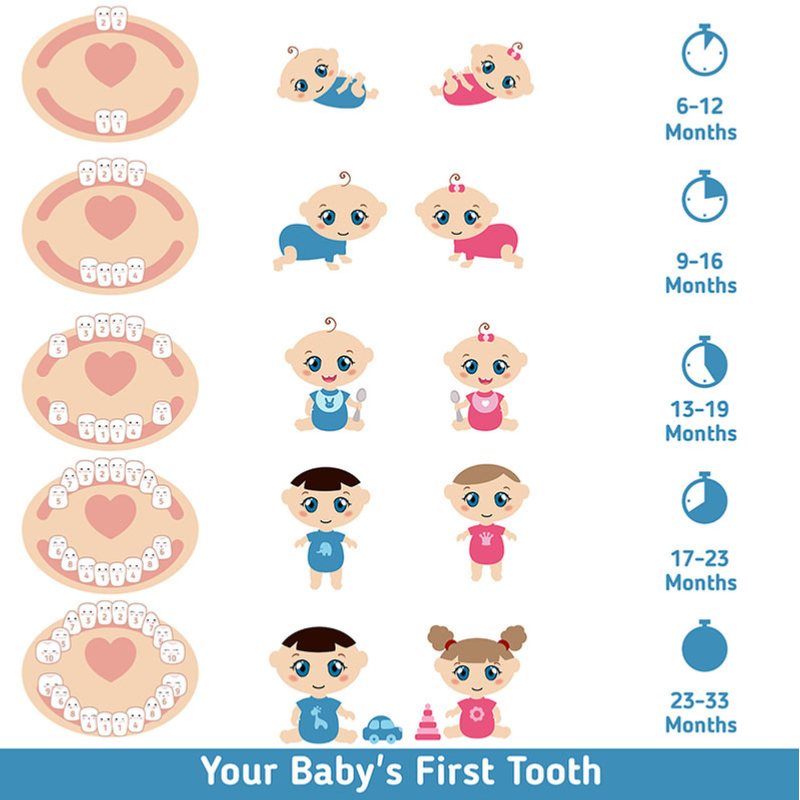
Tooth eruption chart
| Tooth | Order of appearance | Comes in, average age | Falls out, average age |
|---|---|---|---|
| LOWER TEETH | |||
| Lower central incisors | 1 | 6-10 months | 6-7 years |
| Lower lateral incisors | 4 | 10-16 months | 7-8 years |
| Lower canines | 8 | 17-23 months | 9-12 years |
| Lower first molars | 6 | 14-18 months | 9-11 years |
| Lower second molars | 9 | 23-31 months | 10-12 years |
| UPPER TEETH | |||
| Upper central incisors | 2 | 8-12 months | 6-7 years |
| Upper lateral incisors | 3 | 9-13 months | 7-8 years |
| Upper canines | 7 | 16-22 months | 10-12 years |
| Upper first molars | 5 | 13-19 months | 9-11 years |
| Upper second molars | 10 | 25-33 months | 10-12 years |

How to help your baby through teething
Symptoms
- heavy drooling
- a slight rise in temperature
- sweating
- lethargy, crankiness
- red or, on the contrary, pale cheeks
- the baby rubs the area around the nose/mouth with their hands
- eagerly puts everything in their mouth and chews on it
The most important thing to remember during this period is that the immune system is weakened. Any additional symptoms, such as a very high fever or digestive upsets, usually mean that some infection has flared up in the body on top of the teething. It’s important not to let these things slide and to see a doctor.
How to ease teething pain
To ease the pain, try different methods, but at any given moment each child will only go along with a few particular tricks. Get some rubber toys or special teethers. There are liquid-filled teethers that chill nicely in the fridge, so they can soothe swollen gums even more. Buy cooling gels (for example, Calgel), but don’t use them too often. If the pain already comes with a temperature above 38°C, painkillers like Nurofen (ibuprofen) can also come into play — all of this only after talking to your doctor first.
During the day, hard pieces of fruit straight from the fridge are a great distraction and cool the gums (if you’ve already introduced fruit as a solid food, of course) — apples, pears, nectarines and so on.
When the fussing is just starting, you can give your little one a toothbrush — they’ll most likely love scratching their teeth with it and copying you. But this trick, just like the teether, won’t work if your baby is already in floods of tears and can’t see anything beyond your breast :) In that case, the only things that help are your tight hugs, a cooling gel and (apparently the perfect option) mom’s breast…
Sometimes your baby will let you put your finger in their mouth and give their gums a gentle massage. Quite often, it’s exactly at moments like these that you discover something new in there!
P.S. When our youngest, Dale, is teething at night, Dad’s electric toothbrush saves the day instantly — it feels really nice just running it over the outside of his cheek; apparently the vibrations relieve the nasty itching
💪


